
Imperial Beach Neighbor Lookup Sources
Every source answers a different question. Some locate land and recorded interests. Others add civic or election context. None creates a complete household list for Imperial Beach.
Access limits matter as much as the search box itself. Keep that in mind with each lookup.
| Source | What It Shows About a Block | Access |
|---|---|---|
| Imperial Beach MapGeo and SanGIS | Parcel pattern, touching or facing polygons, and nearby APN clues | Map viewer; anonymous owner and abutter exports are blocked |
| ARCC assessor services | Parcel context, roll information, and separate situs or mailing clues | Public inquiry, phone, or office kiosk; web owner display is suppressed |
| ARCC recorded documents | Transfers, liens, maps, party names, and recording facts | Online index, copies, and kiosk images; ownership is not occupancy |
| City Clerk and permit records | Public projects, applications, applicants, and civic correspondence | City request route, permit system, or county request fallback |
| Voter self-lookup and aggregate reports | One person's status or area counts, not a block roster | Exact self-match or qualified request under California law |
| Civic groups and organizations | Public officers, meetings, events, and community activity | Official pages and public contacts; private member lists are not verified |
A parcel may have a titled owner while its occupants stay unknown. A mailing address may point outside Imperial Beach. A recorded deed may name a trust or an entity rather than a person. A city staff page shows an official at work, not a private household. Label each result for what it truly shows. Only then does a block lookup become reliable.
Define an Imperial Beach Block
Boundaries decide who counts as a neighbor, so start there. Streets, alleys, corner lots, common parcels, and facing parcels all shift the answer. Search the subject address itself rather than a guessed numeric range. The Imperial Beach MapGeo properties viewer displays parcel geometry after its disclaimer. It also offers controls for Search, selection, drawing, themes, and documents. For wider layers and regional parcel data, the SanGIS open-data map adds context. A map shows a block's shape. It cannot prove title, occupancy, or where a person lives now.
Adjacent is a word that needs care. A parcel across an alley may matter to a block question without sharing any boundary. A parcel across the street faces the address but never touches it. A narrow common parcel or easement can sit between two lots. It can hide the true abutters. Keep the geometry visible on screen before asking any records office. Request a deed or parcel file only after that.
Mapping Imperial Beach Parcels and Owners
MapGeo keeps its anonymous role tightly limited. The abutters panel stays closed. Spreadsheet, mailing-label, and report downloads are blocked too. The same anonymous view suppresses ownerName, owner mailing fields, owner ZIP, APN, and assessed-value fields. Work the Imperial Beach parcel map visually, one parcel at a time, and let the assessor map or office supply the ownership step.
- Search the target address in MapGeo and zoom until parcel lines, streets, and alleys are clear.
- Click the subject polygon, note its shape and any APN clue, then click each touching or facing polygon.
- Use the official assessor parcel map to confirm adjoining APNs and recorded-map references.
- Call or visit the Assessor for ownership or address information one parcel at a time, recognizing protected entries.
- Use ARCC recorded documents to test a transfer or legal description when a title question remains.
A whole-street question calls for a wider address chain. The Imperial Beach by-street records method walks that full length, while the neighbor lookup stays close to the subject parcel.
Imperial Beach Owners and Occupants
The assessor roll is a periodic property record, not a live list of who lives at an address. The 2026 secured roll reflects the January 1, 2026 lien date and stays accurate through June 30, 2026. Its public output can include parcel and address context, assessed value, exemption amount, a factored base-year value tied to a Prop. 8 reduction, and a reason for any assessment change. Ownership stays suppressed online.
The Assessor can supply ownership or address details by phone at 619-236-3771 or through office kiosks. The ARCC assessor services page is the proper starting point for current access rules. Situs identifies the physical parcel. A mailing address only routes tax correspondence. When they differ, neither proves occupancy.
A deed ties a name to recorded land. That is where its reach ends. No record captures every household member, a visitor, a non-owner occupant, or someone who moved after the record date.
That assessor services source also shows why Imperial Beach neighbor research needs a custodian check after the mapping step.
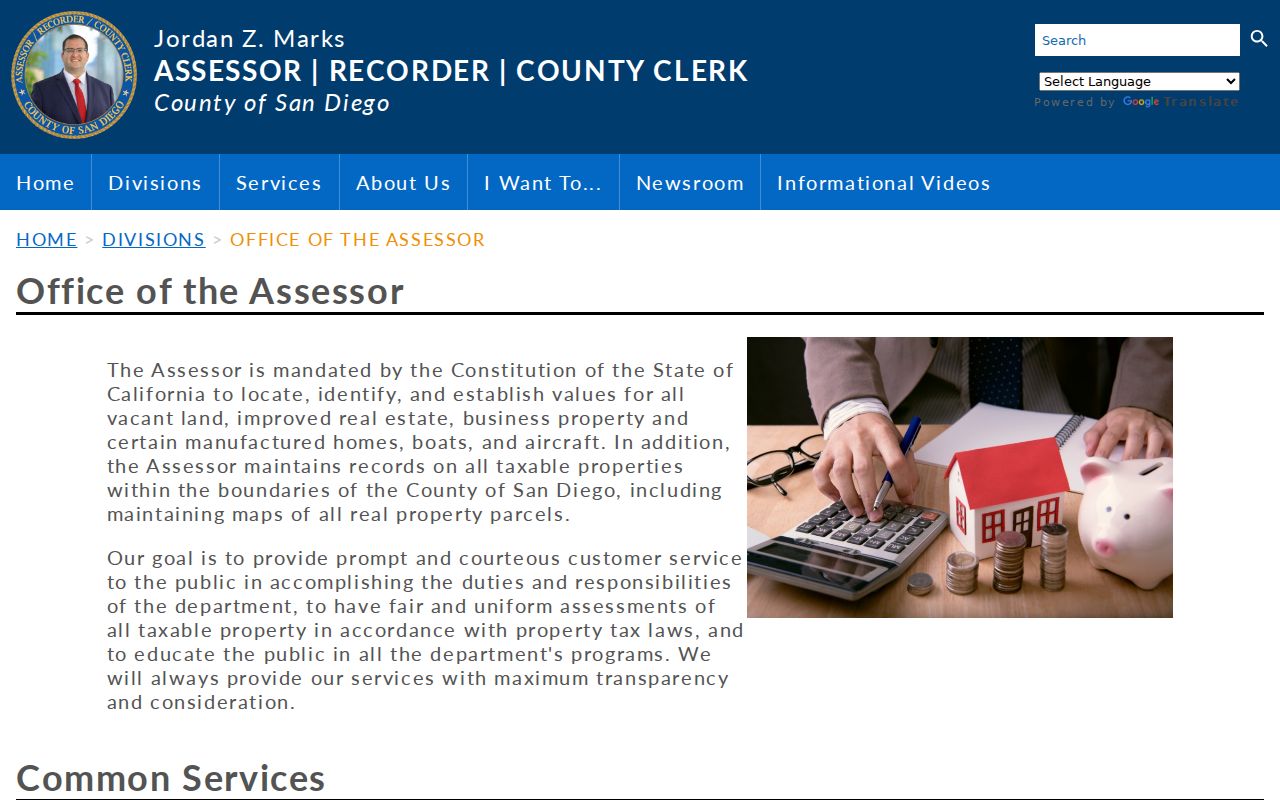
The map and the roll work together. Each Imperial Beach lookup pulls from both.
Date and privacy limits stay part of the result.
Why Voter Tools Skip a Block Roster
California My Voter Status works as an authenticated self-lookup. You supply a first name, last name, date of birth, and one identification route. Options include a California driver license or ID number. A Social Security number's last four digits work as well. The answer that comes back describes the person checking the record. It is not a search of nearby voters, and it never produces a block roster.
The California voter-status form and the San Diego Registrar of Voters lookup sit outside any people directory. That separation is by design. The Registrar keeps a phone fallback at 858-565-5800. Elections Code sections 2188 through 2194 restrict qualified voter-file access to election, scholarly, journalistic, political, or governmental purposes. Commercial use is forbidden outright. Driver-license numbers, Social Security numbers, and signatures stay out of any release.
Aggregate Reports of Registration can supply context for an Imperial Beach street directory effort. That context covers ZIP code, city, or precinct. Counts are not names, though. Even a qualified request does not convert an election file into permission to publish a block list. Safe at Home participants receive added protection on top of all this.
Civic Contacts, Not Private Rosters
The Imperial Beach city staff directory lists offices, not households. Categories run from City Hall and the City Clerk to the Council, City Manager, Community Development, Building, Code Compliance, Planning, GIS and Mapping, Finance and Business Licenses, Fire-Rescue, and Public Works. Each entry gives an official name, title, email, phone, and an alternate number. That suits civic contact. It does not supply a private residents directory.
City Clerk records offer a different kind of paper trail. Agendas, minutes, ordinances, contracts, planning files, permits, and correspondence may all sit in that office. A good request names the record. It also gives a date range, the department, an address, or a project number. Permit and Accela files add applicants, contractors, scope, and dates. Still, a name on a filing is not proof anyone lives there. The county sometimes holds the record instead. In that case, file through the County Public Records Request Center.
People connect in Imperial Beach through councils, commissions, schools, nonprofits, service clubs, and issue groups. No formal association directory or private member roster exists. Meeting rosters, officer lists, and event pages work lawfully for reaching a group. A private membership list is never a substitute for a neighbor directory. The county form, likewise, retrieves identifiable records only. It cannot ask an agency to build a roster of people.
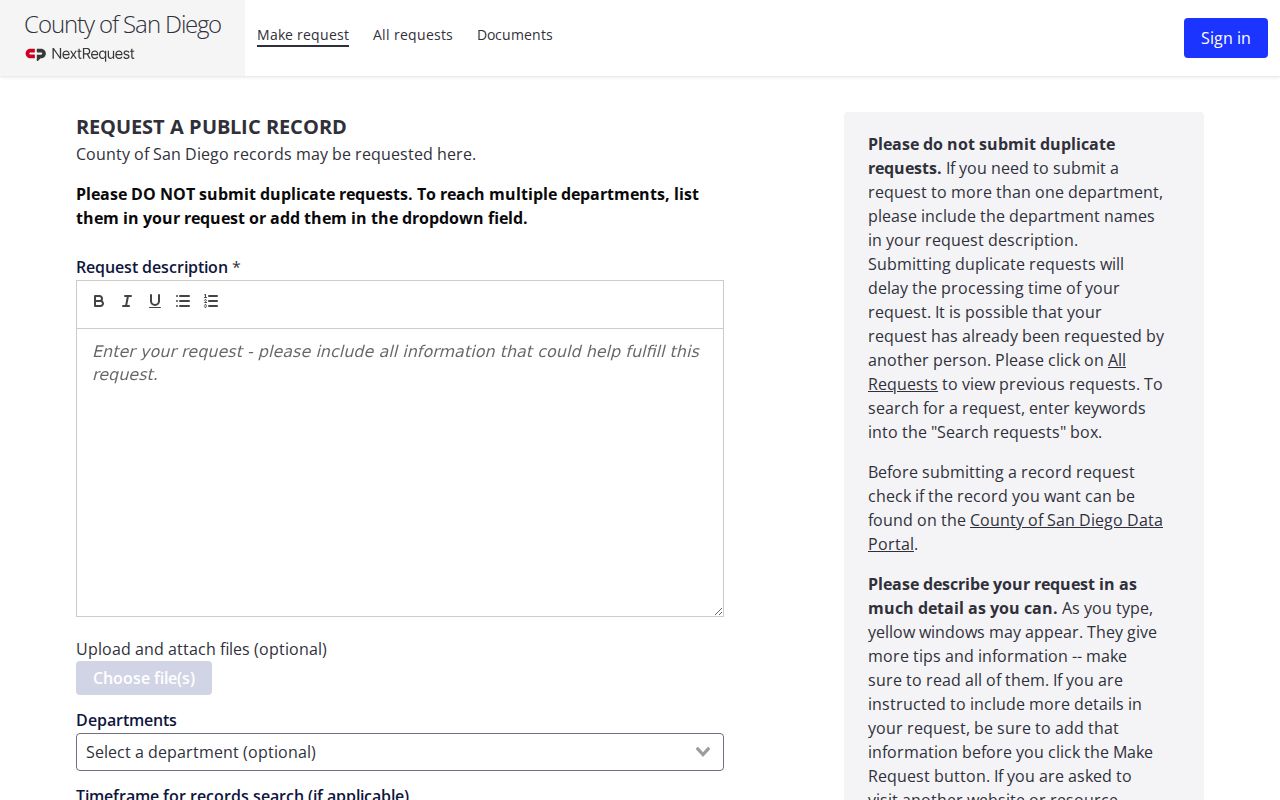
That distinction keeps a civic contact search focused on public work and documented records.
Imperial Beach Condos and Many APNs
Condominium geography breaks simple math in Imperial Beach. One condo site can hold many APNs. One parcel can hold many units. A numeric walk down the street can mislead you. A shared driveway, an alley, or a common parcel can cause the trouble. The parcel facing an address may not even be the parcel touching it. A unit's record can differ from the common land around it.
Read the pieces together. Unit number, map shape, subdivision or condominium name, and APN each add certainty. Each one adds a layer. When the question shifts from parcel geometry to ownership, recorded documents take over. The ARCC recording services page lays out the official route for recorded instruments and copies.
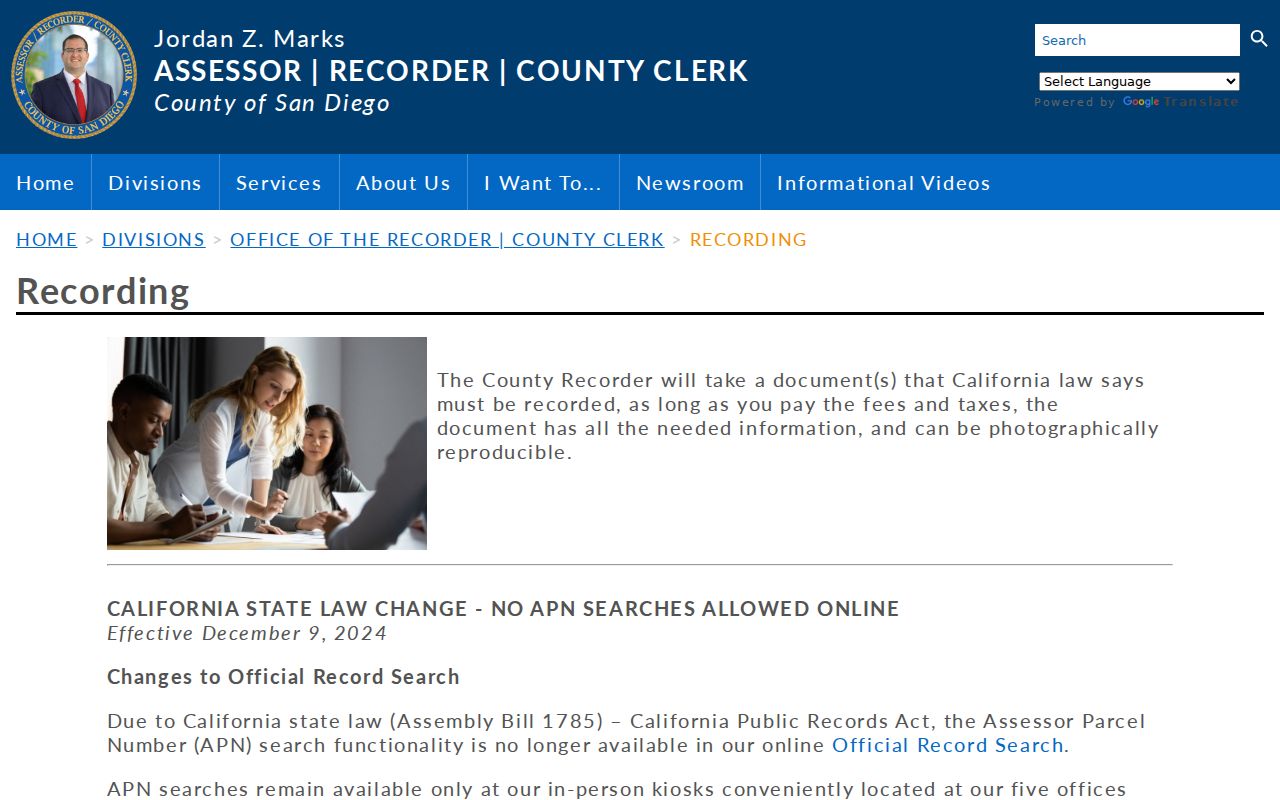
Recording records can confirm a transfer, a map reference, or a party name. That is their honest limit. They cannot attach a named owner to every unit, guest, or occupant inside an Imperial Beach complex. Picture a condo property as mapped units plus common areas, not as one household.
Privacy Rules for Imperial Beach Neighbors
California's Safe at Home program offers a substitute address, mail forwarding, and confidential voter-registration handling. It serves eligible survivors and certain public-facing workers. A withheld or substitute address should never be reverse-engineered. DMV address data, utility records, and delivery-account details do not amount to a public block directory. They cannot be used for finding Imperial Beach neighbors.
Treat a protected address as a boundary, not a puzzle. Applicants enroll through a designated agency. The program shields people connected to domestic violence, stalking, sexual assault, human trafficking, elder or dependent-adult abuse, and specified public facilities. California privacy and data-broker rights can govern covered businesses. Yet they cannot force a county, court, or archive to erase a record it must retain.
Public availability carries a use limit as well. The California Public Records Act reaches identifiable existing records. Exemptions, redactions, sealed material, protected people, and custodian rules still apply across the board. Recorded documents may redact Social Security numbers and restrict military-discharge access. Use a map or deed for personal, lawful research, family history, civic contact, and safety awareness.
| Official records | Created by a county, city, court, election office, or map custodian for a defined event or function. Access is tied to the source's fields, dates, and legal limits. |
|---|---|
| Commercial people-search category | May merge public and nonpublic inputs, stale addresses, and names from different people. Removal is site-specific, and a compiled result still needs custodian verification. |
| Best neighbor use | Map a parcel, verify an owner or recorded event, contact a public group, or understand a block's civic context without publishing a private roster. |
Lawful use. Imperial Beach neighbor research is for understanding a place, reconnecting through a suitable public channel, or handling a legitimate record question. Do not use names, maps, or records to watch, harass, intimidate, or harm anyone.