
Imperial Beach Previous Residents Sources
An address history is strongest when the sources are lined up by the years they can actually cover. The table separates title evidence, household snapshots, civic records, and historical fallback collections. The dates describe a collection or access range, not proof that every Imperial Beach address appears in every volume.
| Source | Years It Covers | Where Held | What It Shows |
|---|---|---|---|
| ARCC Official Records | 1970-present online index | ARCC search, five public kiosks, and copy service | Indexed grantor or grantee names, recording dates, document numbers, and deed-chain clues |
| San Diego County Archives | 1848-1959 physical holdings; bulk 1873-1931 | 10144 Mission Gorge Road, Santee | Older deeds, homesteads, leases, patents, wills, tax lists, and maps |
| San Diego city directories | Physical run 1886-2021; selected digital runs | Central Library California Collection and City Digital Archives | Names and addresses, with local coverage checked volume by volume |
| Federal census | 1790-1950 public schedules | NARA, FamilySearch, and library databases | Households and relationships at a census date |
| Board of Supervisors records | 1877-present | County Clerk of the Board database | Public actions, roads, subdivisions, petitions, and named participants; results cap at 400 |
| Imperial Beach permits | Current online system; historical cutoff not published | City Tyler/EnerGov system and city request route | Project address, applicants, contractors, scope, and dates where released |
Begin with the current parcel when the goal is a house history. Begin with a directory or census when the question is a household at a past date. County Archives and the County Clerk of the Board matter when the online index stops, while the library shelf can connect an old street name to a person or event.
The California State Library history and genealogy collection is one documented fallback for directories, newspapers, and county histories.
That regional shelf is most useful when a local volume is not digitized or when the city name does not appear in a catalog title.
Start With the Imperial Beach APN
The present-to-past sequence starts with address control. Normalize the delivery address with the USPS address lookup, then locate the parcel and APN in a county assessor or GIS tool. The APN is the San Diego parcel identifier. It is a better bridge than a street string when a unit, suffix, subdivision, or older spelling shifts.
Keep the physical situs address separate from the assessor mailing address. Situs identifies the land. Mailing address routes notices. A match may suggest an owner connection, but it does not prove that the owner occupied the parcel. If they differ, record both and do not turn the mailing route into a household claim.
- Write the exact present address, including unit, direction, and street suffix.
- Use assessor or GIS tools to locate the parcel, APN, subdivision, and legal-description clues.
- Record the situs address and the separate mailing address shown by the source.
- Search the ARCC name index and note every document number, party role, and recording date.
- Order or view the operative deed, then use its legal description to move to the prior transfer.
Maps and survey records can solve a break in the chain when an address looks new but the lot and block remain the same. A present APN is the starting key, not the answer to who lived at the site.
Imperial Beach Deed Chain Backward
ARCC's Official Records index reaches 1970-present and is now primarily a grantor and grantee name route. APN searching was removed from the public online search on December 9, 2024, under AB1785. APN research remains available at five public kiosks, which changes how an address-based trail must be built. Search the current indexed owner, the prior seller, and spelling variants rather than expecting the web form to walk a parcel backward by itself.
An index result can show indexed party names or roles, recording date, document number, and document type. The full legal description and instrument substance require the image or copy. Images are free to view at ARCC kiosks. Online copy orders require an account, print the next business day, and normally take 3-5 business days plus mailing. ARCC does not send deed images by email or fax.
The Chula Vista ARCC office at 590 Third Avenue is the practical nearby kiosk, open Monday through Friday from 8 a.m. to 5 p.m., with no appointment required. Ordinary copies are $2 for the first page and $0.05 for each added page, with $1 for certification. Card payments add $2.50. A mail request should include the document number, recording year, at least one party, and document type; the Recorder line is 619-238-8158.
APN bridge. Search the name index, kiosk APN route, legal description, and later reconveyance or correction documents together. One deed rarely tells the whole chain.
Imperial Beach Chain Of Title Terms
Deed language can make a prior-resident search seem more certain than it is. These terms keep ownership evidence and household evidence in their proper lanes.
- Grantor
- The person or entity shown as conveying an interest in the recorded instrument.
- Grantee
- The person or entity shown as receiving that interest. A grantee can later appear as a grantor.
- Chain of title
- The linked sequence of recorded transfers for the same land, checked through parties and legal descriptions.
- Legal description
- The formal land description in a deed, subdivision, lot, block, or survey reference. It can remain useful when a street address changes.
A chain of title identifies recorded interests, not every person who occupied the parcel. A deed can name an entity, trustee, estate, or family member who did not live at the situs. Conversely, a directory or census household can include people who never held title. Previous residents research needs both layers and a date for each claim.
Imperial Beach in County Archives
San Diego County Archives is the pre-digital fallback for older land and civil material. The collection is held at 10144 Mission Gorge Road in Santee. The published contact is archives@sdcounty.ca.gov and 619-237-0502, with weekday hours from 8 a.m. to 5 p.m. Physical official-record holdings span 1848-1959, with the bulk from 1873-1931.
Named series include deeds from 1846-1918, homesteads from 1860-1931, chattel mortgages from 1860-1920, leases from 1869-1934, patents from 1850-1930, certificates of sale from 1870-1900, Torrens certificates from 1919-1955, wills from 1848-1938, delinquent-tax lists from 1958-1973, and maps from the 1850s forward. Early instruments may be hand-copied into Miscellaneous Record or type-specific bound books with indexes.
The County Clerk of the Board search page documents a separate civic trail reaching from 1877 to today.
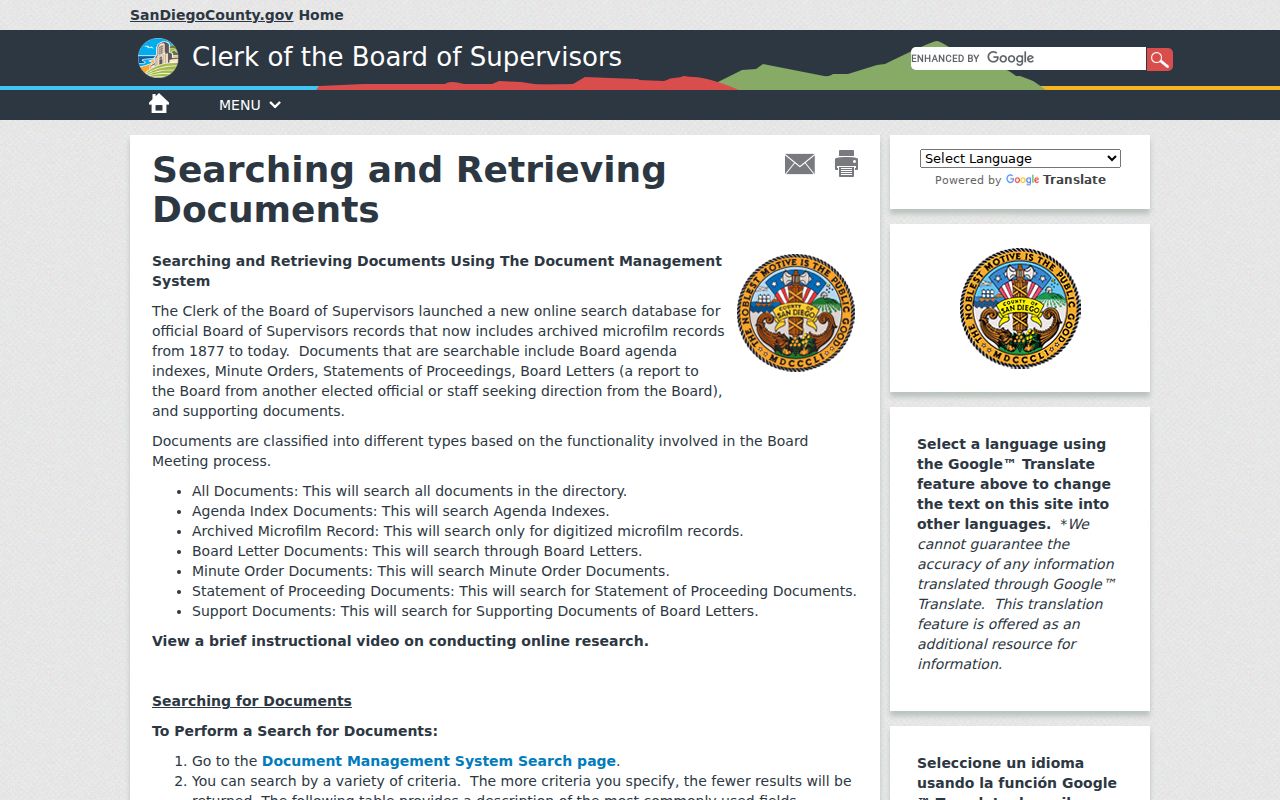
Board records can surface old road names, subdivision actions, petitions, and named participants. They add context to an address history, but they do not replace a deed or household source.
| Board search key | Document type, Contains keyword, date range, properties or conditions, reel, and frame |
|---|---|
| Result limit | Search results cap at 400, so narrow a broad name or date range |
| Record span | Digitized archived microfilm and later records from 1877-present |
Imperial Beach Previous Residents: Census and Obituaries
Federal census schedules add a household snapshot that a deed cannot. Under the 72-year rule, 1950 is the latest public population census as of 2026. Imperial Beach incorporated in 1956, so an earlier household may be listed under unincorporated South Bay or another San Diego County geographic label. Enumeration-district maps and address crosswalks are part of the work.
The National Archives census resources explain access to the public schedules.
Pair a census household with the closest directory year, then compare the address, surnames, ages, and relationships. A census records the household on one date. A directory records an apparent adult listing in a publication cycle. Neither proves continuous presence between snapshots.
San Diego Public Library verifies a physical city-directory run from 1886 through 2021 at Central Library Special Collections. Digitized runs include 1874; 1926-1944/45; 1947/48; 1950; 1952; 1953/54; 1955 Suburban; 1956 City and Suburban; 1957 City and Suburban; 1958 City and Suburban; 1959 Suburban; and 1960 Suburban. The mid-century Suburban volumes are the most plausible Imperial Beach route, but each local entry must be checked. Exact local reverse-directory runs were not located.
The source inventory also did not locate an authoritative street-renumber chronology for Imperial Beach. Do not force an old number into a present address without a subdivision map, survey record, or other documented crosswalk.
Previous Residents Before Imperial Beach Incorporated
Imperial Beach incorporated in 1956, while San Diego County's deed, census, and county-government series are older. That mismatch is a useful research clue. Search the older record under South Bay, San Diego County, township, subdivision, or ranch language instead of expecting the modern city name to be present.
For a directory and census pairing, choose a target year, search the alphabetical section for a surname and address, check the volume's street or reverse section when one exists, then compare the closest census schedule. Add a deed date, newspaper notice, obituary, vital index, or probate case only when it fits the same address and time span. The absence of one name is not proof of absence. Publication cutoffs, nonlisting, spelling variants, military service, boundary changes, and incomplete coverage can all create a gap.
The collection details and reading method belong with the Imperial Beach city directory collections. The backward trail here uses those volumes as dated evidence rather than treating a directory title as proof of local coverage.
Imperial Beach Permits and Probate
City permit records can date construction, remodeling, demolition, and project contacts. Imperial Beach uses a Tyler/EnerGov system for building applications, plan checks, and payments. After the September 14, 2024 authentication change, existing users had to re-register with the same email. City Hall kiosks and staff help are offered Monday through Thursday from 7:30-9 a.m. and 3:30-5 p.m.; the inspection line is 619-628-1360. The address-keyed fallback form asks for name, email, phone, project address, city, state, ZIP Code, and the building permit inquiry, with an optional emailed copy. No authoritative historical cutoff or stable anonymous result schema was published.
Newspapers, obituaries, cemetery records, and probate can explain a change that the property chain only dates. The Superior Court, not ARCC, holds probate case files and wills lodged in proceedings. Federal matters are separate. The Southern District of California court site provides the local federal access point.
A federal case may confirm a party, date, or address clue, but a common name alone is unsafe. Court records answer the event recorded in the case, not a continuous resident history.
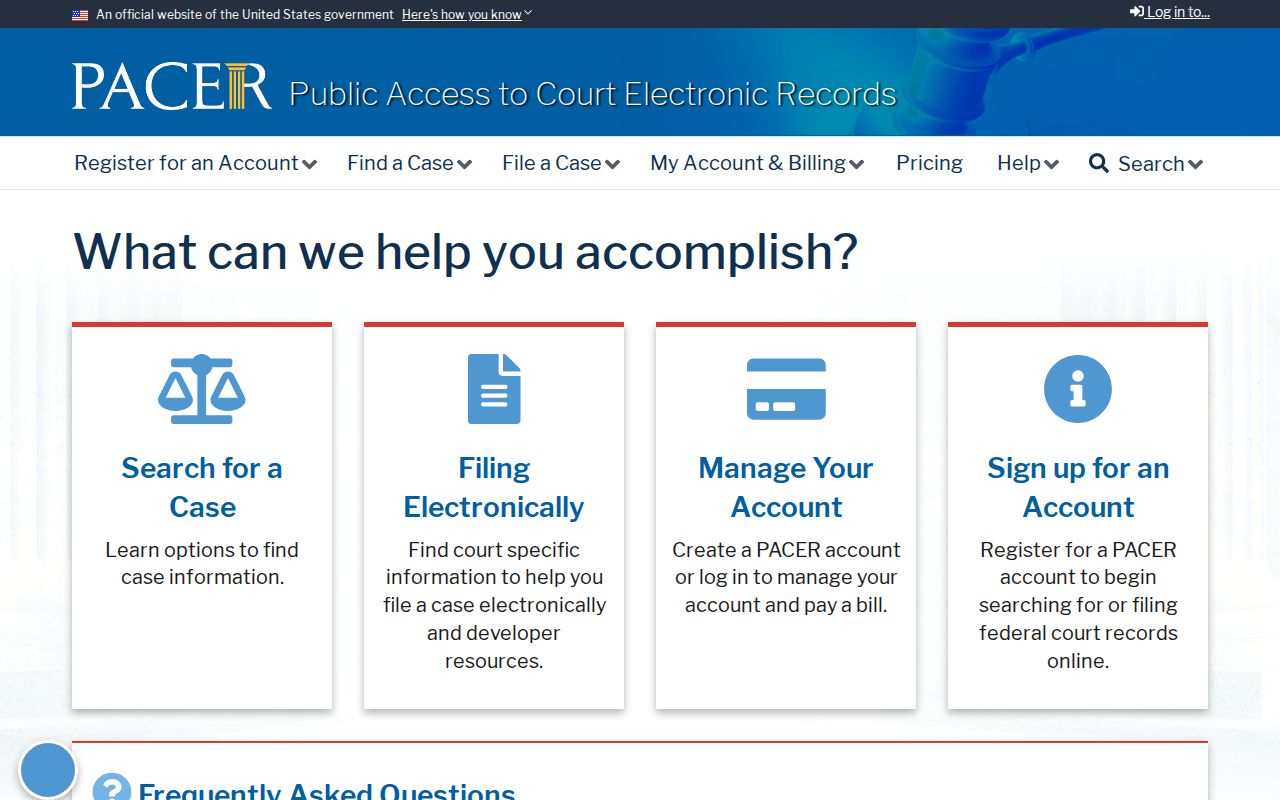
The PACER records service searches federal party and case information. PACER normally charges $0.10 per page with a $3 cap per document, subject to fee rules and quarterly waivers.
The Southern District Clerk's Office lobby at Suite 420, 333 West Broadway, offers paper or electronic file review on weekdays from 8:30 a.m. to 4:30 p.m. Self-service prints are $0.10 per page, staff copies are $0.50, and certification is $12 plus copying. Archived Federal Records Center files require an advance request.
Lawful house history. Previous-resident research in Imperial Beach is appropriate for family history, estate work, and learning about a place. Do not use a record trail to watch, track, intimidate, or repeatedly contact a living person.